Blog
AI avatar video ads: what they are, how they work and when to use them
AI avatar ads put a synthetic presenter on camera to speak your script. How they work, what they cost, where they fall short and how to make one.
Published October 13, 2026 · 5 min read
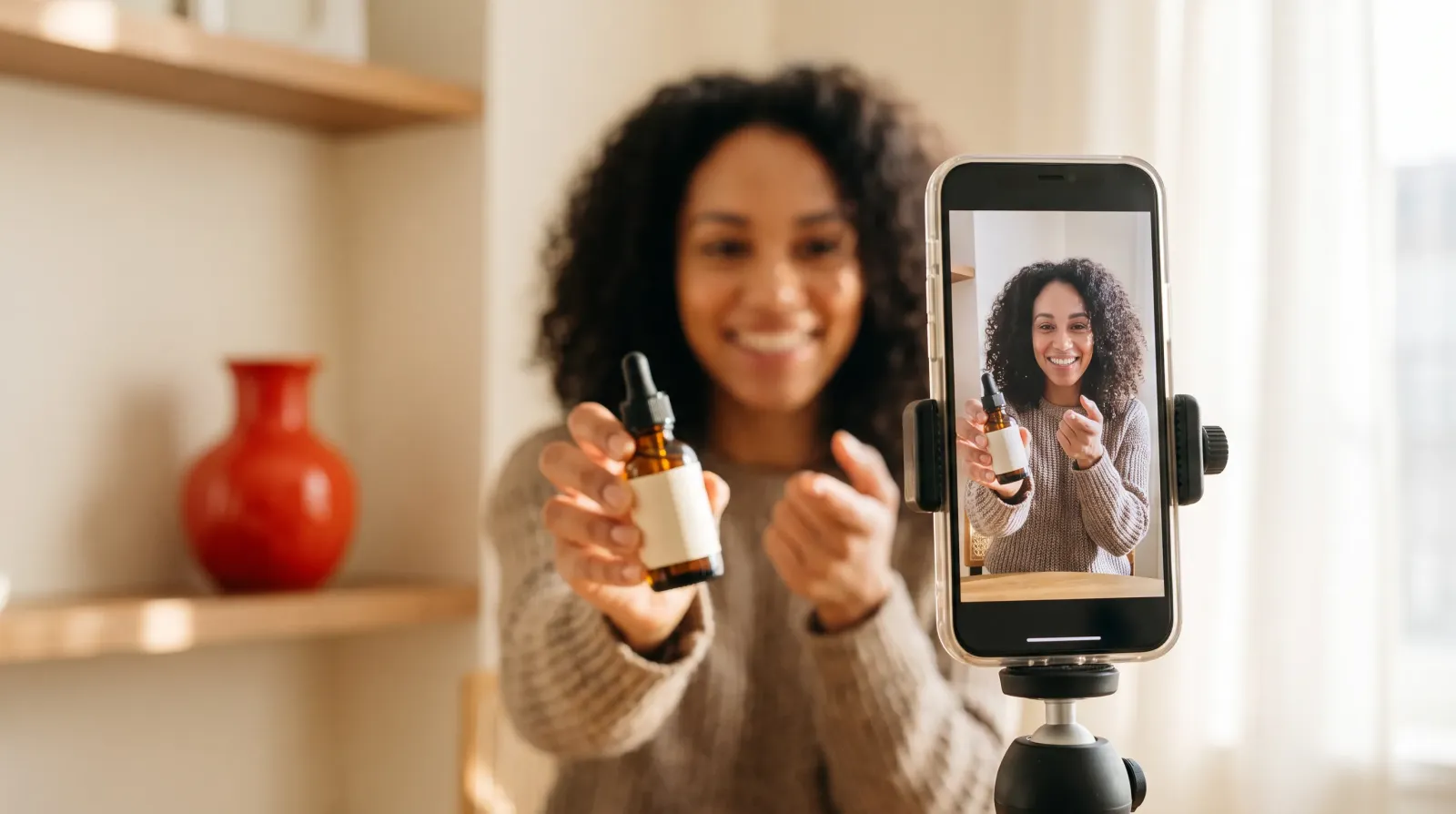
An AI avatar video ad is a UGC-style ad where the person talking to camera is generated by AI. You write (or generate) a script, pick a synthetic presenter, and the tool renders a vertical video in which that presenter speaks your lines with a natural voice, synced lip movement and captions. Marketers also call them AI actor ads, AI spokesperson videos or AI UGC; the format is the same.
What counts as an AI avatar?
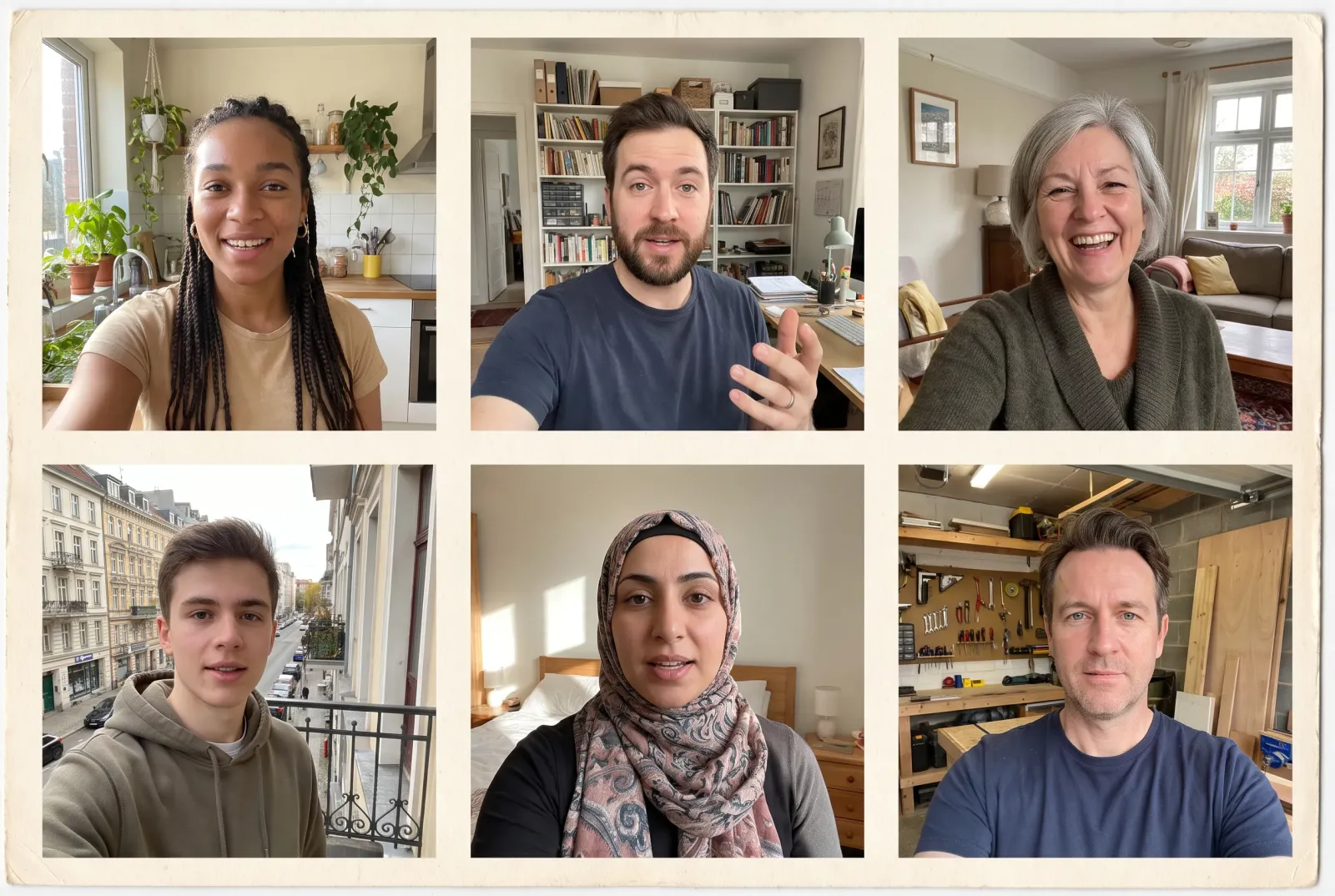
An avatar is a fictional presenter: a generated face, body, voice and setting that does not belong to any real person. A good library covers ages, styles, settings and languages so the presenter can match the audience of each ad. It is not a digital twin of a real creator and it is not a cartoon mascot; it is built to look like an ordinary person filming a phone video at home.
How an AI avatar ad is made
- Brief: the tool reads a product page, app listing or written description and extracts the product, audience, benefits and price.
- Script: a hook, two or three beats and a call to action, written for one angle such as problem–solution, unboxing or objection handling.
- Casting: you pick a presenter whose age, setting and tone fit the audience of that ad.
- Voice and lip sync: the script is voiced and the presenter’s mouth is animated to match it, word for word.
- Captions and end card: captions are burned in from the first frame, because most people watch feeds on mute, and the ad ends on the product and the offer.
- Export: the same ad is rendered in 9:16 for TikTok, Reels and Shorts, and in 4:5 or 1:1 for feeds.
Lip-synced avatars and native AI video
There are two ways to make the presenter move. A lip-synced avatar animates a presenter clip so it speaks an exact, pre-recorded line: the script is respected word for word, the result is predictable and it is cheaper. A native video model generates the whole scene, presenter included, from a prompt: more movement and handling of the product, less control over the exact words, and a higher price. Most testing programmes run on lip-synced avatars and keep native video for a few hero variations.
| Lip-synced avatar | Native AI video | |
|---|---|---|
| Script | Spoken word for word | Close to the prompt, may drift |
| Movement | Talking head, small gestures | Full scene, can handle the product |
| Consistency | Same presenter every time | Varies between renders |
| AdFace price | 1 credit per 15 seconds | From 3 credits per 15 seconds; depends on model and resolution |
When avatar ads work, and when they do not
- They work for testing hooks and angles: change one line, re-render the same presenter, compare.
- They work for localisation: the same script in English, French and Arabic without recasting.
- They work for products that are easy to explain to camera: apps, beauty, gadgets, food and drink, services.
- They are weak for proof that depends on a real person: before-and-after results, long-term use, expert endorsements.
- They are weak for hero brand films, where a known creator or a real shoot carries more trust.
Disclosure and honesty rules
A synthetic presenter has never used your product, so the script should describe a situation, not a personal experience. “If your serum pills under makeup, watch this” is honest; “I have used this every day for a year” presents a fictional person’s experience as fact. TikTok asks advertisers to label realistic AI-generated content, and Meta adds an “AI info” label to ads made or edited with AI; label your avatar ads wherever the platform offers it, and keep claims to what you can prove.
What an AI avatar ad costs
Creator UGC is usually priced per video, with usage rights and product shipping considered separately. On AdFace, Starter is $39/month for 20 credits, Growth $129 for 80 and Agency $349 for 300. Video cost depends on duration, style, model and resolution, and the estimate appears before rendering. Choose one campaign format: 9:16, 1:1 or 4:5. Eligible new accounts receive two trial credits without a card; trial exports carry a watermark.
Checklist for a good avatar ad
- A hook in the first two seconds that names a situation, not the brand.
- Captions on screen from the first frame.
- A presenter whose age, setting and language match the audience.
- The product visible on screen, not only described.
- One claim you can prove, rather than three you cannot.
- A clear call to action and the offer on the end card.
- The AI label switched on where the platform offers it.
Making an avatar ad with AdFace
Paste a product URL and AdFace drafts the brief, writes scripts for eight angles and lets you cast a presenter for each one. Every script is editable and screened for medical, financial and weight-loss claims before credits are spent; nothing renders until you approve it. Ads come back as MP4s with captions in three styles, in English, French or Arabic.
Questions this answers
- Are AI avatar ads allowed on TikTok and Meta?
- Yes, as long as they follow the usual ad policies and are labelled as AI-generated where the platform asks for it. TikTok expects realistic AI-generated content to be disclosed, and Meta shows an “AI info” label on ads made or edited with AI.
- Can an AI avatar say it used my product?
- It should not. A synthetic presenter has no experience of the product, so first-person testimonials are misleading. Write the script around a situation or a demonstration instead.
- How long should an AI avatar ad be?
- Fifteen to thirty seconds works for most UGC-style ads: long enough for a hook, a demonstration and an offer, short enough to hold attention in a feed.
- Can AI avatars speak French or Arabic?
- Yes. AdFace writes scripts, voices and captions in English, French and Arabic, with right-to-left captions for Arabic.
Turn your product page into ads
Paste a product URL and get vertical ads with synthetic presenters, captions and exports.
Start freeKeep reading
- UGC ad script template: a 30-second structure with 6 example scripts
- Video ad specs 2026: TikTok, Instagram Reels, YouTube Shorts and Meta feeds
- AI ad disclosure on TikTok and Meta: what each platform asks for
- AI UGC ads for agencies: producing creative tests for many clients
- AI UGC video ads for Shopify and e-commerce stores
- AI UGC ads vs. hiring UGC creators: which to use, and when
- AI UGC video ads for mobile apps: from store listing to install ads
- Making Arabic video ads with AI: scripts, voices and right-to-left captions
- How to choose an AI UGC ad generator: a 10-point checklist
- French UGC video ads with AI: launching in France, Belgium, Switzerland and Quebec
- How many ad creatives should you test? A practical framework
- UGC ad hooks that work: 8 patterns with examples
- What are AI UGC ads? A plain definition, and when they work
- Labelling AI-generated ads: what to disclose and where
- How to turn a product page into UGC video ads